A new exhibition exploring the life and work of photographer Lisel Haas has launched at the Library of Birmingham.
Discovering Lisel Haas unearths a previously hidden photo archive and reveals how Haas, a refugee from Nazi Germany, rebuilt her life in 1930s Birmingham.
Haas, born in Mönchengladbach in 1898, had already built a successful photographic career in Germany before she was forced to flee in 1938. She settled in Birmingham with her partner, Grete Bermbach, and re-established herself as a photographer in the city, starting her career again in a new country and a new language.
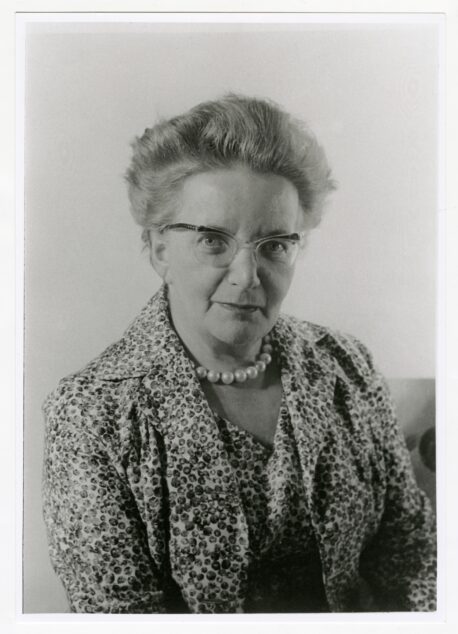
Credit: Photographer unknown (presumably Grete Bermbach or Lisel Haas), Lisel Haas, Date Unknown
On display until Sat 12 Dec, the exhibition is accompanied by a public programme and cataloguing project at the Library of Birmingham.
The exhibition presents selected material from the Haas archive alongside newly commissioned responses from five contemporary artists: Anu Gamanagari, Gibson Kochanek Studio, George Eksts, Laura Chen and Rebecca Orleans, and is accompanied by a published book of essays and written responses to the archive.
Works include Gamanagari’s photographic portraits of three women who have migrated to Birmingham. Each taken within the sitter’s own domestic space, inspired by Haas’ practice. The portraits are presented with fragments of archival documents, hinting at the bureaucratic language through which migrant lives are processed and assessed.
Elsewhere, Chen, a Dutch image maker, writer and musician who lived and studied in Birmingham, combines photographs from her personal archive with text extracts of letters, film negative sleeves and sketches from Lisel’s archive to create a collage that acts as a postcard to her past self.
Also amongst these responses is Fragments of Lisel Haas, a poem by Simone ‘Word’ Smith, which was performed live at the exhibition launch, and features within the exhibition as a recording.
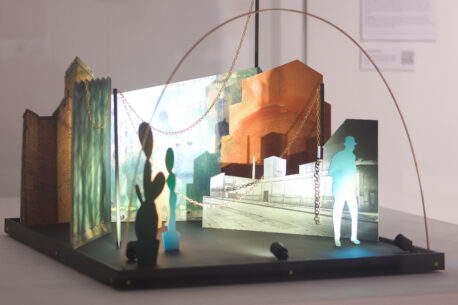
Credit: George Eksts, Modern Instances, 2026. Credit: Irina Mackie
Haas’ archive, now held at the Library of Birmingham, includes photographs, letters and documents that connect this personal history with Birmingham’s wider cultural life. It also includes her important work with Birmingham Repertory Theatre, where she photographed productions and performers for more than two decades.
A staircase at Birmingham Rep is still lined with Haas’s images, including photographs of major actors associated with the theatre such as Paul Scofield, Albert Finney, Ian Richardson and Derek Jacobi. The project will bring new attention to a visible but often under-recognised part of the theatre’s own history.
Beyond her work at the Rep, Haas ran a portrait studio in Moseley, photographing local families at a time when professional photography, rather than the personal cameras most people take for granted today, was how important occasions and portraits were captured.
The project is being led by Bertz Associates in partnership with the Library of Birmingham, with public funding by the National Lottery through Arts Council England, The National Archives’ Archives Revealed programme and the John Feeney Charitable Trust.
Iris Bertz, of Bertz Associates, said: “Lisel Haas’s archive has been held in Birmingham for many years, but its full story has not been widely known. This project is about bringing that story into view: not only the photographs themselves, but the life behind them, the people she photographed, and the city she made her home.
“Haas was a professional photographer who came to Birmingham at a time of huge upheaval and rebuilt her career here. Her work connects Birmingham to European history, theatre, migration, women’s lives and the hidden stories that sit inside archives until someone opens the box.”
As part of the project, the archive is being formally catalogued for the first time, with photographic artist and archivist Clare Hewitt leading the work, while a blue plaque is planned for Haas’s former home and studio in Moseley, funded by the John Feeney Charitable Trust.
Speaking about the collection, Clare says: “Cataloguing an archive is not simply an administrative process. It is a way of making material visible, searchable and meaningful. With the Lisel Haas archive, we are uncovering a body of work that tells us about a photographer, her subjects and the cultural world she documented.
“The exhibition gives the public a chance to see part of that work, but the wider project is also about understanding what the archive contains and why it matters now.”
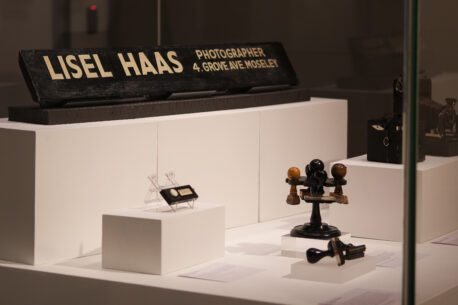
Credit: Irina Mackie
Exhibition curator, Jen Wilbur, shares more about compiling the collection: “The story of these two incredibly resilient women is told through the photographs they took and the letters and documents they kept, which now make up the archive held at the Library of Birmingham. The exhibition is curated around the themes that appear in the collection: Lisel and Grete’s personal life, their professional life, photographic processes, and different types of photography. The interpretation of the material has been informed by conversations we’ve had with local community groups, ensuring the contemporary relevance of the project.”
“The Lisel Haas story is remarkable. Haas was a German-Jewish lesbian photographer who, at the age of 40, escaped persecution and was forced to restart her career in a foreign country. The community she found in Birmingham saw her talent and rallied around her. After she passed, the importance of her story was recognised and preserved, but only now is it being remembered.”
Jen will be leading a series of Curator Talks over the coming months for those who want to delve further into the story of Lisel Haas and works on display. You can find all the upcoming dates here.
Discovering Lisel Haas is open now and free to visit at the Library of Birmingham and runs until Sat 12 Dec. You can read more about the project here.
Mon 27 Jul - Sat 12 Dec, Library of Birmingham, Centenary Sq, Birmingham B1 2ND
- Words:
- Bradley Lengden
- Published on:
- Thu 17 Sep 2026